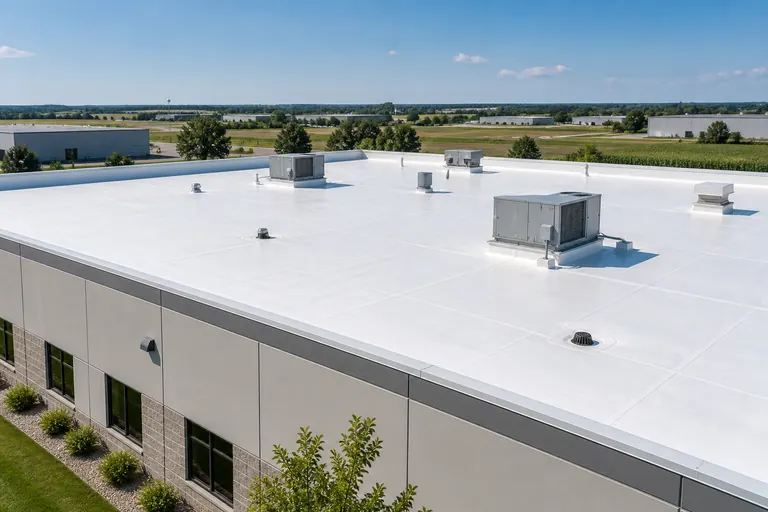
Begin with an assembly and operations inventory
Identify the roof areas, existing system, available installation records, leak history, drainage paths, and rooftop equipment. Have a qualified assessor explain what is known and what requires further investigation before selecting a repair, coating, recover, or replacement.
Record how the building operates: customer access, sensitive inventory, food or healthcare uses, tenant hours, and critical services. A workable roof plan must account for what happens below it. Roof area alone does not define the job.
Compare systems and scopes—not labels alone
A coating is not a universal substitute for replacement, and a recover is not appropriate merely because it avoids tear-off. Ask the assessor to address existing moisture, substrate condition, compatibility, drainage, structural implications, and manufacturer requirements.
For replacement, request details for edges, flashings, penetrations, insulation, drainage, temporary protection, and connections at rooftop equipment. Specify the investigation and approval process for concealed conditions. Avoid selecting a membrane solely from a color sample or generic life-expectancy claim.
Confirm Iowa and local review responsibilities
Ask the local building office to classify the scope and identify required documents and inspections. Particular occupancies and state-related facilities may involve DIAL plan review; use the state jurisdiction resources rather than assuming an ordinary local reroof process covers the building.
For older materials, discuss whether a qualified asbestos survey, regulated handling, or notification is needed before disturbance. Iowa DNR publishes renovation and asbestos resources. Applicability depends on the facility and work; do not treat a roof’s appearance as proof that suspect materials are absent.
Write an occupied-building work plan
Agree on protected entrances, delivery and crane access, debris removal, temporary drainage, air-intake considerations, and communication with tenants. Coordinate electrical, solar, HVAC, and other equipment work with qualified trades.
Ask how crews will leave open areas protected at the end of each day and respond to an unexpected weather change. Iowa storm and winter conditions make that conversation relevant even when the original schedule is in a favorable season.
- Named owner representative and contractor contact.
- Daily work boundaries and protected access routes.
- Change-order approval and weather-delay communication.
- Required inspections before work is concealed.
- Equipment shutdown and restart responsibilities.
Make the closeout package useful to the next manager
Request material and warranty documents, approved changes, photos, inspection closure where required, and a roof plan showing important details. Record who handles workmanship concerns and which maintenance activities are needed to preserve applicable coverage.
Create a practical maintenance log with assessment dates, leaks, repairs, and drain observations. After severe weather, document the building’s actual condition rather than assuming either damage or no damage from a regional report.
Budget for the uncertainty as well as the work
Compare proposals on an equivalent scope, including investigation, disposal, access, protection, equipment coordination, and contingencies for hidden deterioration. Identify which costs are allowances and how they become approved changes.
Use the statewide planning and permits guides for the next steps, then bring the legal address and building use to the quote conversation. Local guide coverage does not by itself establish contractor availability for specialized facilities.
Official sources & further reading
Resources checked September 9, 2026. Rules and linked documents can change; confirm the current requirements with the responsible office.
- Iowa DIAL: plan review, jurisdiction, and code resources
- Iowa DNR: asbestos, renovation, and notification resources
- National Weather Service Des Moines: August 2020 derecho