Stay safe before you inspect anything
Follow local emergency instructions. Keep away from downed lines, unstable trees, hanging debris, and areas that may collapse. If there is immediate danger, leave the affected area and call emergency services. Do not climb onto a damaged roof to collect evidence.
Iowa has experienced destructive straight-line wind events, including the August 2020 derecho documented by the National Weather Service. That history is a reason to prepare—not proof that your roof was damaged by any particular event.
Document what you can safely observe
From safe ground-level locations, photograph visible damage and debris. Inside, document staining or leakage only where it is safe to enter. Record the date, approximate time, affected rooms, and temporary steps taken. Do not disturb suspect structural areas for a better photo.
Separate observations from conclusions: missing material is an observation; identifying the cause and extent may require a qualified assessment. Save prior roof records so an assessor can distinguish older conditions from newly reported concerns.
Separate temporary protection from permanent repair
Ask a qualified contractor about temporary measures when conditions allow. Roof tarping and access involve fall, electrical, and structural hazards and are not homeowner tasks to improvise from this guide. A temporary measure does not certify that the structure is safe.
Get the temporary-work scope, price, limitations, and follow-up plan in writing. Know who checks it after subsequent weather and how permanent repairs will be coordinated. Avoid treating emergency status as an automatic waiver of permit obligations.
Request an assessment of the whole affected system
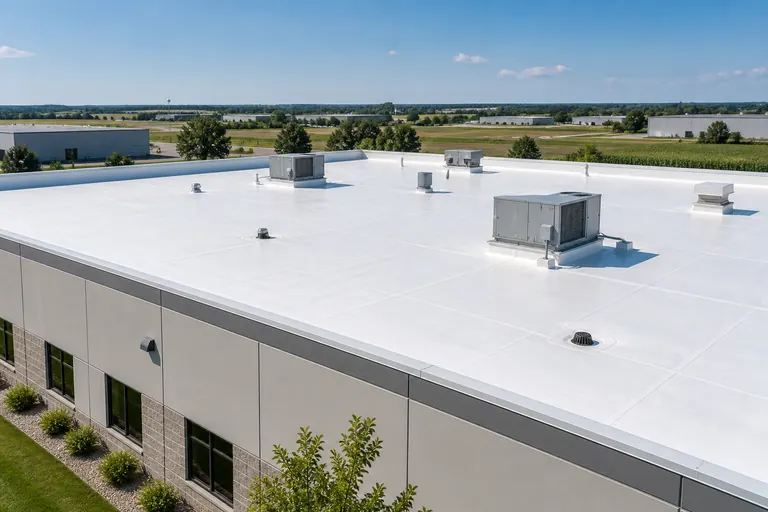
Ask for findings at edges, flashings, penetrations, drains, and the roof covering, plus any accessible supporting conditions. For a commercial building, include rooftop equipment and the appropriate trades in the review.
The assessment should explain repairable damage, unresolved questions, and whether underlying work changes the proposed scope. Compare the recommendation with our repair-versus-replacement guide before committing to more work than the evidence supports.
Keep claim decisions and construction decisions distinct
Contact your insurer about reporting, documentation, policy obligations, and any inspection process. Do not assume all cosmetic damage is covered, a claim will pay for replacement, or a contractor can guarantee the outcome. Keep copies of temporary-protection receipts and correspondence.
Check Iowa contractor registration and insurance documentation. Read authorizations carefully, identify who can approve additional work, and avoid signing a scope you do not understand under time pressure. Confirm service availability and a realistic communication plan after widespread storms.
Return to the ordinary planning steps
Before permanent work, confirm local permit and property-specific requirements, material compatibility, inspection stages, and weather protection. Structural repairs or changed roof assemblies may require more than a covering-replacement application.
Retain final photos, invoices, warranties, and permit closure where required. The next storm is easier to evaluate when you have a clear record of what was repaired and when.
Official sources & further reading
Resources checked September 9, 2026. Rules and linked documents can change; confirm the current requirements with the responsible office.
- National Weather Service Des Moines: August 2020 derecho
- Iowa DIAL: contractor registration
- Iowa DIAL: plan review, jurisdiction, and code resources